A blank report on a nautical chart, with a brass ruler. Illustrative image.

How we work

Evidence first. Judgement second. A person accountable for both.

Every scenario, workshop and assessment follows the same method, from the decision it supports to the person who signs it off.

The method

From decision to follow-up

  1. Decisions first

    We start from the decisions your leadership needs to make, not from a list of topics.

  2. Collection

    Official, regulatory, company, specialist and media sources, collected against those decisions. Every item is dated and logged, including searches that found nothing.

  3. Checking

    Each item's origin and dates are recorded. Repeated reports and translations do not count as independent confirmation, and search results are not treated as evidence until they are verified.

  4. The scenario

    A plausible bad week, built from the evidence: what happens hour by hour, what follows for you and the warning signs that would come first.

  5. The session

    Your leadership works through it with us, and the decisions are recorded as they are made.

  6. Follow-up

    An action report with owners and dates, the warning signs to watch and the questions for your board.

Sample

What a warning-sign alert looks like.

Ongoing readiness clients get one when a warning sign in their plan trips. This example is illustrative.

Example · Warning-sign alertPublic sources

What changed
Your main fuel supplier tells commercial customers it is facing "supply constraints". Illustrative example
What it means
Allocation often follows within days. For the next fortnight, storage and your priority list matter more than price.
What to watch
An allocation percentage, a start date, or a list of priority users from government.
Confidence
Illustrative only. Not a current assessment.
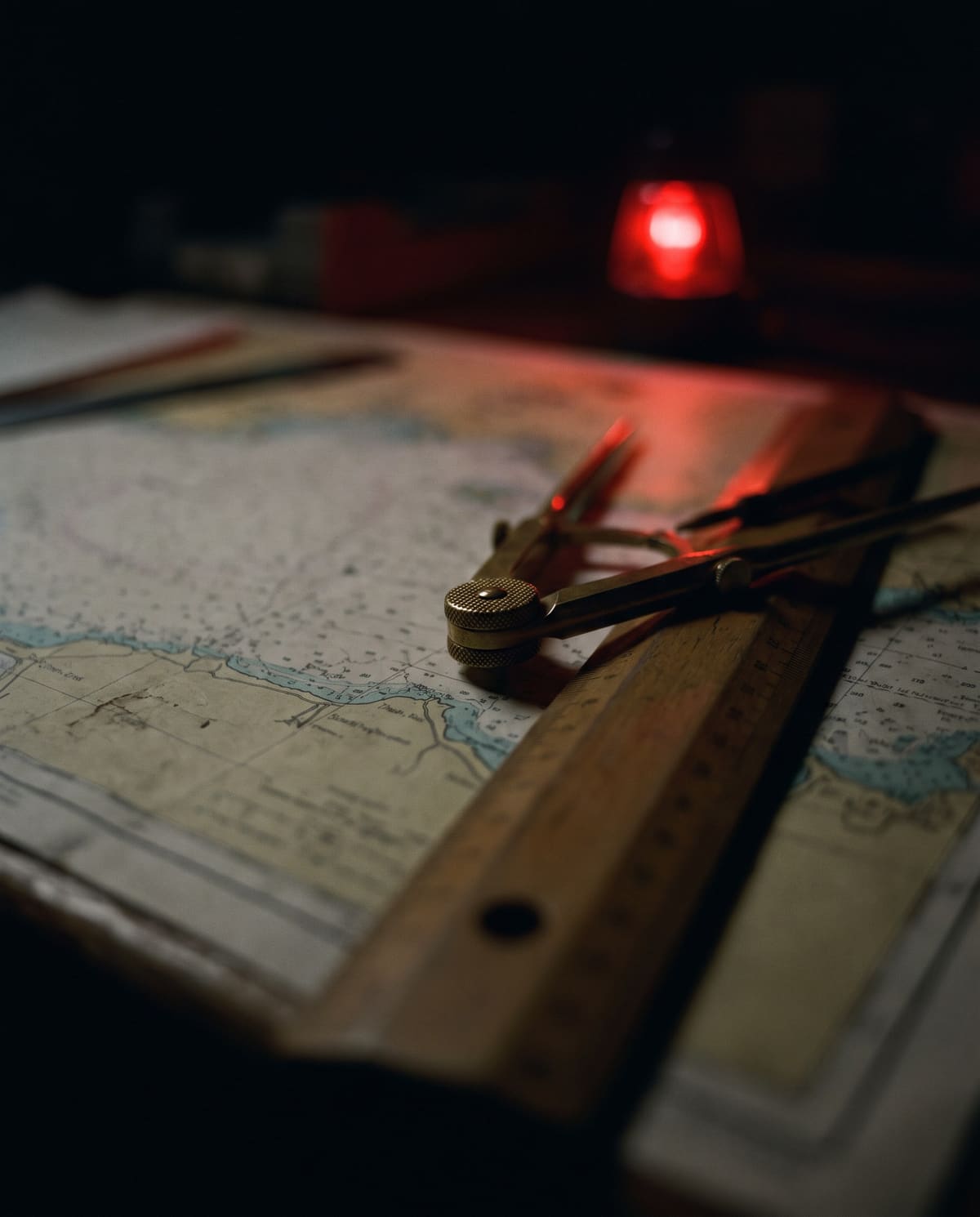
A nautical chart and brass dividers under a dim red night light. Illustrative image.

Standards

The language of every judgement

Confidence
High, moderate or low, judged on the strength of the evidence and how uncertain the situation is, with the reason stated.
Observed or assessed
We separate what was observed from what we assess, and keep event, publication and retrieval dates apart.
Traceability
Every judgement we release traces back to its evidence, its source and the question it answers.
Versioning
A released document is never overwritten. Corrections are issued as new versions, with the reason.

Principles

Six rules

Decision first
We start from the decisions you need to make, not from a list of topics.
Calibrated language
Every judgement states how confident we are and why. Forecasts are labelled as forecasts, with the signals that would change them.
Lawful and proportionate
Public sources, and in client work what you choose to share. Personal information only when it is relevant, and kept to a minimum.
Evidence before judgement
Every material claim is sourced and dated, and names its original publisher.
Honest gaps
If we do not know, we say so. Each gap is recorded as a known unknown, and we direct collection at the gaps that matter most. The platform keeps evolving with global conditions, because intelligence is dynamic, never a static product.
Human judgement
AI tools help us collect, sort, translate and draft. A person checks every judgement against its full evidence before it is released, and is accountable for it.


Limitations

Ethical and lawful collection

  • Lawful and proportionate collection, within the Privacy Act.
  • No unauthorised access, hacking, deception or pretexting.
  • No access to private channels without authority.
  • No leaked or stolen data.
  • No surveillance of individuals, facial recognition or private investigation.
  • No profiling of people for their beliefs or associations.

Questions

What leaders ask first

Is this an AI tool?

No. It is intelligence work. AI tools help collect, sort, translate and draft; a person checks every judgement against its full evidence before it is released, and the sources are shown.

What sources do you use?

Lawful public sources: government and official publications, regulators, courts, parliament, company disclosures, specialist and trade reporting, and reputable media. We prefer primary and official sources and name every one.

Do you name your clients?

No. We do not name a client or describe its work, in marketing or to other clients, without its written consent.

How is our information handled?

Your information is used only for your work and kept separate from other clients. Please do not send passwords, vulnerability data, security plans or information protected under the SOCI Act until we have agreed in writing how it will be handled.

Is this a SOCI compliance product?

No. If your organisation has SOCI obligations, our work can inform how you think about outside hazards. It does not determine whether you meet an obligation and it is not legal advice.

A cargo ship at sea off a pale headland under an overcast sky. Illustrative image.

Talk to Matthew.

A 30-minute call with Matthew Lonsdale, an Australian Defence Force veteran and intelligence professional, about the decisions your team carries and whether a workshop, the Diagnostic or ongoing work would help. No obligation.

Book a briefing